Melt value worksheet
Gold melt value calculator
Calculate the live melt value of gold jewelry, coins, bullion and scrap by karat and weight. This page focuses on recoverable gold content first, so you can separate intrinsic metal value from buyer deductions, retail premiums and collectible value.
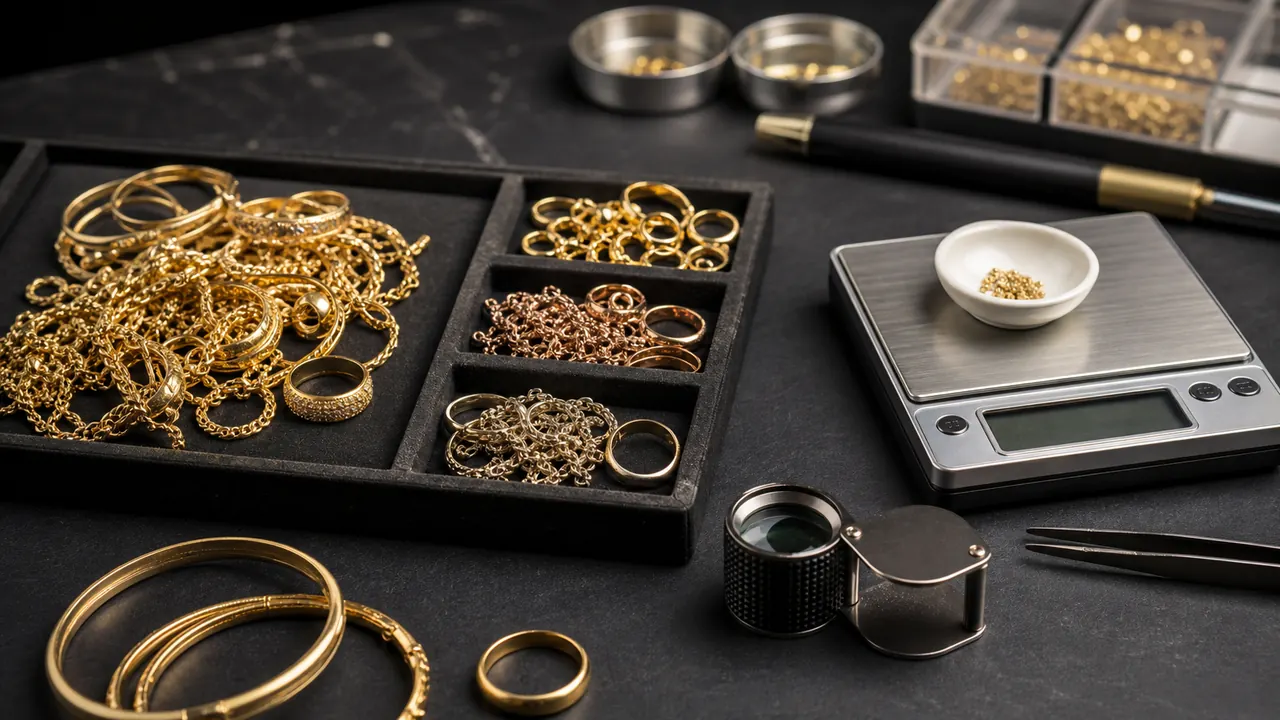
Gold melt worksheet
Calculate recoverable gold value
| Item | Gross grams | Pure gold grams | Melt value |
|---|---|---|---|
| 14K ring | 10.00g | 5.83g | $801.33 |
| 18K chain | 6.00g | 4.50g | $618.53 |
Melt value formula
How to calculate gold melt value
Step 1
Convert weight to grams
Jewelry scales usually use grams, while bullion may use troy ounces.
Step 2
Apply karat purity
14K is about 58.3% gold, while 18K is 75% gold.
Step 3
Multiply by live price
Use the 24K price per gram as the pure gold reference.
Gold melt value by purity
These rows use the current 24K per-gram reference and apply common karat purity factors. They are useful for checking whether a buyer, refiner or appraiser is using the same baseline.
| Purity | Melt value per gram | Melt value per troy oz | Common use |
|---|---|---|---|
| 24K / 999 | $137.31 | $4,270.90 | Bullion, pure gold bars, some coins |
| 22K / 916 | $125.90 | $3,916.06 | High-purity jewelry and investment jewelry |
| 18K / 750 | $103.09 | $3,206.38 | Fine jewelry and watch cases |
| 14K / 585 | $80.13 | $2,492.43 | Common U.S. rings, chains and earrings |
| 10K / 417 | $57.32 | $1,782.75 | Durable budget jewelry |
| 9K / 375 | $51.54 | $1,603.19 | UK and Australia jewelry |
| 8K / 333 | $45.77 | $1,423.63 | Some European 333 gold jewelry |
What gold melt value does and does not include
A gold melt value calculator answers one specific question: how much is the recoverable gold content worth at the current market price? It does not estimate retail replacement value, designer value, collectible premium, gemstone value, tax, shipping or a buyer's final margin. That separation is important because many sellers compare the wrong numbers.
A jewelry store selling price can be far above melt value because it includes design, labor, brand, inventory cost and retail margin. A scrap buyer offer can be below melt value because the buyer has testing, refining, hedging and resale costs. Melt value sits between those two worlds. It is the neutral metal baseline.
Why karat purity changes the calculation
Karat gold is an alloy. Pure gold is 24K, while 18K contains 18 parts gold out of 24, or 75% gold. Fourteen karat gold is roughly 58.3% gold, and 10K is roughly 41.7% gold. Two pieces with the same weight can therefore have very different melt values. A 20 gram 10K chain contains less pure gold than a 20 gram 18K chain even if they look similar.
This is why the best melt value workflow is item by item. Sort the lot by stamp, weigh each group, and calculate each row separately. Do not average a mixed bag of jewelry unless you already have a professional assay. If you enter the wrong purity, the result can be off by hundreds of dollars on a heavy lot.
When melt value is the right baseline
Melt value is most useful for broken chains, single earrings, damaged rings, old dental gold, unattractive jewelry and bullion checks. It is also useful when comparing buyer quotes. If one buyer offers 70% of melt and another offers 88% of melt using the same weight and purity, the second quote is clearly stronger before fees.
Melt value can be the wrong baseline for signed designer jewelry, antique pieces, rare coins, watches or jewelry with valuable stones. Those items may sell for more as finished pieces. In that case, use melt value as a floor, not as the asking price.
How to avoid common melt-value mistakes
The most common mistake is weighing stones, steel springs, glue, watch movements or non-gold clasps as if they were gold. Another mistake is using the 24K price for lower-karat jewelry. A third mistake is comparing a per-troy-ounce spot price with a per-standard-ounce weight. Gold markets use troy ounces, and one troy ounce equals 31.1035 grams.
For serious lots, ask the buyer to show the measured weight, test method, purity assumption, spot price and payout percentage. Then run the numbers again in this calculator. If the buyer's math is transparent, you can decide whether the convenience, speed and trust level justify the final offer.
Why the spot price timestamp matters
Gold melt value is tied to a moving market price. A quote made at 10 a.m. and a quote made near the market close can differ even if the weight and karat are identical. This is why a melt value calculator should show the price basis and update time instead of only showing a final number. When you compare a dealer, pawn shop or refiner quote, ask which spot price they used and whether the quote is locked for a specific time window.
Small differences are normal because calculators may round purity, convert troy ounces slightly differently or pull market data from different providers. Large differences usually come from one of three inputs: the wrong unit, the wrong karat or a payout percentage being mixed into the melt-value number. Keep those inputs separate and the estimate becomes much easier to audit.
Using melt value as a negotiation floor
Melt value is not a demand that every buyer must pay 100%. It is a floor that helps you understand the metal. If a buyer offers far below the melt-value baseline, ask what deductions are being applied. If the buyer offers close to melt value, confirm whether shipping, assay fees, stone removal or payment fees are still deducted later. The best quote is not always the biggest headline number; it is the one with the clearest math.
Cash for gold calculator
Model the likely buyer offer after melt value.
Gold price per gram
Check the live per-gram reference behind each row.
Gold hallmark lookup
Confirm stamps before selecting the purity.
Gold melt value calculator FAQ
What is gold melt value?
Gold melt value is the estimated value of the recoverable pure gold in an item. It ignores retail markup, design value, stones, brand value and buyer profit margin.
How do I calculate gold melt value?
Convert the item weight to grams, multiply by its gold purity, then multiply by the live 24K gold price per gram. For example, 14K uses about 0.583 purity.
Is melt value the same as scrap gold value?
They are closely related. Melt value is the metal value before deductions, while scrap gold value often means the amount a buyer may pay after testing, refining and margin.
Why is the melt value lower than the jewelry store price?
Retail jewelry can include making charges, design, brand markup, taxes, stones and selling costs. Melt value only measures the gold content.
Can I use this calculator for gold coins?
Yes for metal value, but coins may have collector premiums. Bullion coins can be close to melt value, while rare coins should be appraised separately.
What weight unit should I use?
Use grams for jewelry, pennyweight if your buyer quotes dwt, and troy ounces for bullion. The calculator converts each supported unit back to grams before valuing the gold.
Does the calculator include refining fees?
The melt-value calculation itself does not include fees. Use the payout selector to model buyer deductions, refining costs or a realistic offer percentage.
What if my gold stamp is missing?
Do not guess if the value is meaningful. Use acid testing, electronic testing, XRF testing or a reputable jeweler before relying on a melt value estimate.