Cash offer estimator
Cash for gold calculator
Estimate what a cash for gold buyer may offer before you walk into a pawn shop, mail jewelry to an online buyer or compare local quotes. The calculator starts with live melt value, then lets you apply realistic payout percentages so the final number looks closer to a real offer.
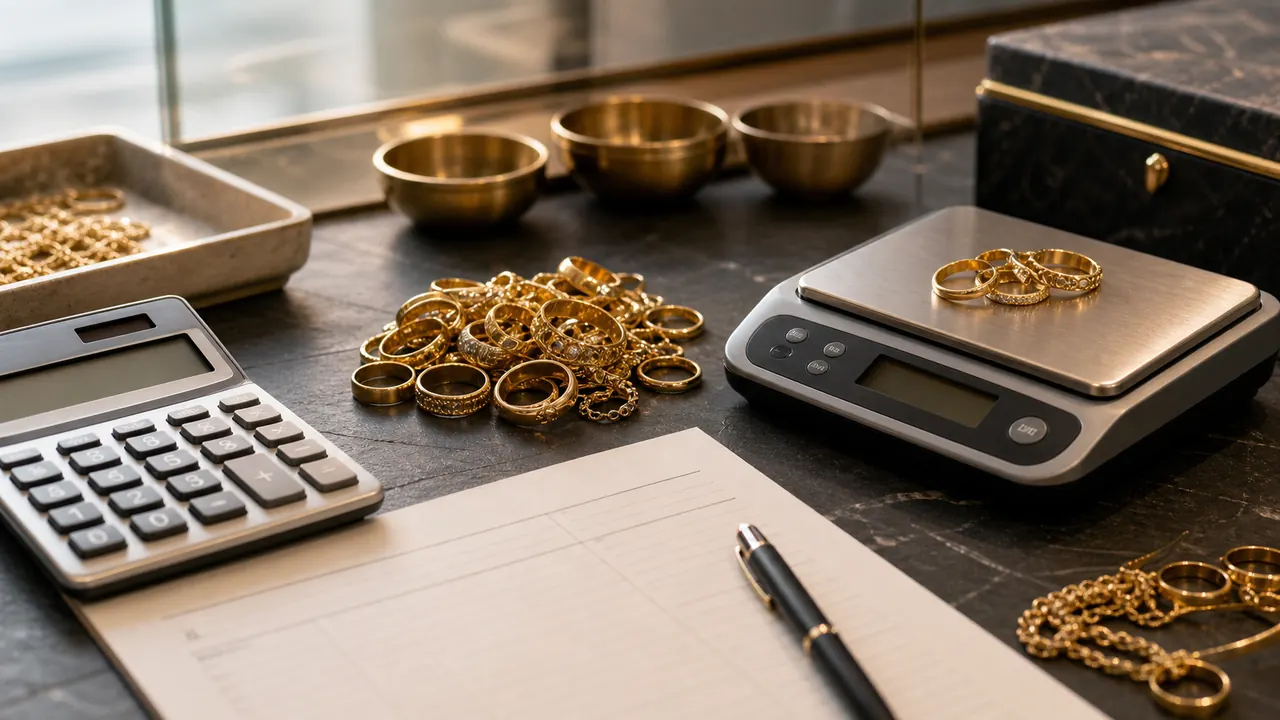
Cash for gold worksheet
Estimate the cash offer, not only melt value
| Item | Gross grams | Pure gold grams | Melt value |
|---|---|---|---|
| Gold ring | 10.00g | 5.83g | $809.50 |
| Gold chain | 6.00g | 4.50g | $624.82 |
Offer formula
How a cash for gold estimate is calculated
The practical formula is simple: weight in grams times gold purity times live 24K price per gram equals melt value. Then multiply melt value by the buyer payout percentage to estimate the cash offer.
Example
10g x 14K purity x live 24K gram price x 75% buyer payout
The payout percentage is the part many sellers forget. A buyer can quote a fair melt value but still pay less than melt because of refining cost and margin.
Typical cash for gold payout ranges
Public gold buyers show different payout assumptions. Some pawn-shop style calculators use lower percentages, while refiners and high-volume online buyers may advertise stronger payouts. Treat the ranges below as a comparison tool, not a promise.
| Buyer type | Typical payout | Best use case |
|---|---|---|
| Walk-in pawn shop | 45% - 75% | Fast cash for small lots, but offers can be conservative. |
| Local gold buyer | 65% - 88% | Often better than a pawn shop if they test and weigh in front of you. |
| Online mail-in buyer | 75% - 95% | Can be competitive, but shipping, insurance and trust matter. |
| Refiner or dealer | 88% - 98% | Best for larger sorted lots, bullion, coins or repeat sellers. |
How to use this cash for gold calculator before selling
A cash for gold calculator is most useful before you speak with a buyer. It gives you a private estimate of the metal value and a realistic offer range, so the conversation is not controlled only by the shop's number. Start by finding the karat mark on each item. Common stamps include 417 for 10K, 585 for 14K, 750 for 18K, 916 for 22K and 999 for 24K. If the stamp is missing, use a hallmark lookup or ask for testing before assuming purity.
Next, weigh each item separately. A 14K ring and an 18K chain should not be averaged together because they contain different amounts of pure gold. If stones, steel springs, watch parts or non-gold clasps are included in the weight, the estimate will be too high. The cleaner your weight input is, the closer the calculator will be to the buyer's melt-value math.
What makes a cash offer different from melt value
Melt value is the value of the recoverable gold content. A cash offer is what a buyer is willing to pay after testing, refining, hedging and business costs. This is why two numbers matter: the gold melt value and the expected cash for gold offer. If a buyer simply says "I can pay this much" without showing the weight, karat, spot price and payout percentage, you cannot easily compare that quote with another buyer.
The most useful question is not "What is my gold worth?" but "What percentage of melt value is this buyer paying?" A low cash number may be fair if the item is low purity or full of non-gold parts. A high-sounding cash number may still be weak if the lot contains heavy 18K or 22K pieces. The calculator keeps those inputs visible.
Checklist before accepting cash for gold
- Separate 10K, 14K, 18K, 22K and 24K items before weighing.
- Remove obvious non-gold pieces, watch movements and loose stones from the weight.
- Ask which spot price timestamp the buyer used.
- Ask for the payout percentage, not only the final cash number.
- Compare at least two offers if the lot is worth more than a few hundred dollars.
If your jewelry has a designer signature, antique value, collectible coin premium or meaningful gemstone value, do not treat the calculator as the final selling price. It is a metal-value baseline. Some items should be appraised or sold as finished jewelry rather than melted.
When to get more than one quote
Get multiple quotes when the estimate is large, when the karat mark is unclear, when the buyer refuses to show the calculation, or when a piece might have value beyond metal. Even a 10% difference in payout can matter on a heavy chain or estate lot. For small broken pieces, convenience may matter more than the highest theoretical payout, but you should still know the melt-value baseline before accepting cash.
How to read a cash offer line by line
A transparent buyer quote should be easy to rebuild inside the calculator. Look for four details: gross weight, tested purity, spot price and payout percentage. If the quote lists 12.4 grams of 14K gold, the buyer should also be able to explain whether the weight includes stones, steel springs, watch parts or non-gold findings. If the lot was tested as 14K but one item is actually 18K, the offer can be too low.
The spot price timestamp also matters. A buyer using a morning price and a seller checking an afternoon price may see a different number even when both calculations are honest. That is why this page shows the update time next to the live reference price. When comparing two offers, try to compare quotes made on the same day and ask each buyer to write down the price basis they used.
Best use cases for this calculator
Use this calculator for old rings, broken chains, single earrings, class rings, dental gold, inherited mixed jewelry and small estate lots. It is less useful for branded jewelry, rare coins, watches, diamonds or pieces with clear resale demand. In those cases, run the metal estimate first, then decide whether an appraisal, consignment sale or specialist buyer could return more than a simple cash-for-gold offer.
Scrap gold calculator
Estimate mixed jewelry lots by karat and weight.
Gold melt value calculator
Focus on recoverable gold content before buyer deductions.
Gold hallmark lookup
Decode 417, 585, 750, 916 and 999 stamps.
Cash for gold calculator FAQ
How does a cash for gold calculator work?
A cash for gold calculator estimates the metal value first, then applies a buyer payout percentage. The core formula is weight in grams multiplied by karat purity multiplied by the live 24K gold price per gram, then multiplied by the expected payout rate.
Will I receive the full melt value in cash?
Usually no. A buyer has to test the item, refine or resell it, manage price risk and cover operating costs. The calculator shows melt value and estimated offer value separately so you can see the gap.
What is a fair cash offer for gold jewelry?
Fair offers vary by buyer and lot size. A small pawn shop offer might be 50% to 75% of melt value, while a strong online buyer, refiner or dealer may pay 85% to 95% before any fees.
Should I use grams, pennyweight or troy ounces?
Use the unit shown on your scale or quote. Grams are easiest for most sellers, pennyweight is common in some U.S. gold buying shops, and troy ounces are common in bullion markets.
Do diamonds or gemstones increase the cash for gold offer?
Not always. Many scrap buyers pay only for recoverable gold and either ignore stones or deduct their weight. Valuable diamonds, signed jewelry and antique pieces need a separate appraisal.
Why do cash for gold quotes change during the day?
Gold spot prices move during market hours. If a buyer updates prices often, the same ring can produce a slightly different estimate later in the day.
Can I calculate several gold items at once?
Yes. Add each ring, chain, earring or dental gold item as a separate row. Separate rows are more accurate than averaging mixed karats together.
Is this calculator a guaranteed offer?
No. It is a negotiation estimate based on live gold price, weight, purity and payout percentage. A real buyer may change the offer after testing purity, stones and non-gold parts.