UK scrap gold value estimator
Scrap gold calculator UK
Estimate the GBP melt value of broken jewellery, rings, chains, earrings, dental gold and mixed scrap lots before you accept a UK buyer offer.
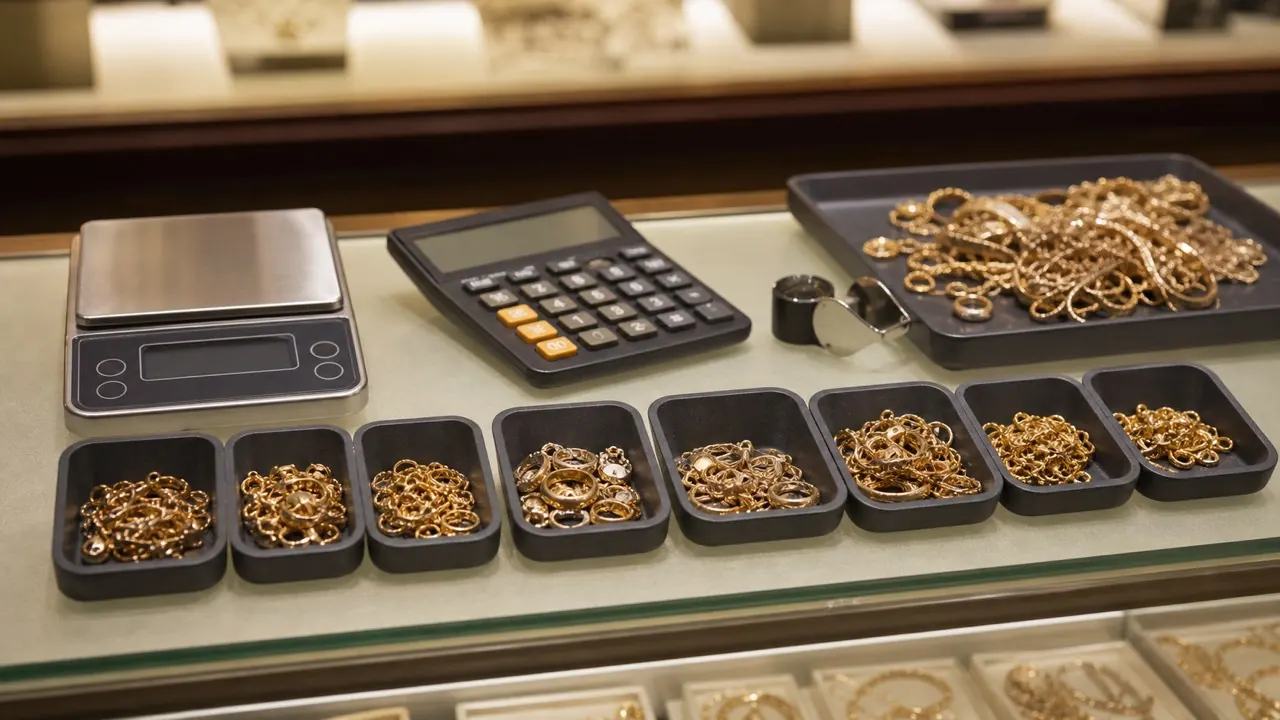
UK scrap gold worksheet
Add each UK item, then compare the buyer offer
| Item | Gross grams | Pure gold grams | Melt value |
|---|---|---|---|
| 9ct ring | 10.00g | 5.83g | £586.15 |
| 18ct chain | 6.00g | 4.50g | £452.43 |
What UK scrap gold buyers usually pay
The range depends on hallmark clarity, lot size, buyer type, testing cost, postage and refining route. Use this as a comparison framework, not a guaranteed quote.
| Buyer type | Typical payout | What to check |
|---|---|---|
| High-street cash-for-gold shop | 55% - 80% | Fast and local, but payout can vary widely by shop. |
| Postal gold buyer | 70% - 90% | Convenient for UK sellers, but check insurance, return policy and quoted deductions. |
| Jeweller or bullion dealer | 75% - 92% | Often better for clean lots, coins or clearly hallmarked jewellery. |
| Refiner / trade buyer | 88% - 98% | Usually strongest for larger lots, businesses or repeat sellers. |
How to prepare a UK scrap gold lot
A scrap gold calculator UK works best when the inputs match how a buyer will test the lot. Separate solid gold from plated, rolled gold or gold-filled items. Then group the solid pieces by hallmark: 375 for 9ct, 585 for 14ct, 750 for 18ct, 916 for 22ct and 999 for 24ct.
For each group, weigh the gold portion and add a separate row. A buyer may deduct stones, springs, watch parts, solder, enamel or non-gold clasps. If those parts are included in your weight, the estimate will be too high.
How to compare UK scrap gold offers
Ask each buyer to show the weight, carat, spot price, exchange rate and payout percentage. A single cash number is hard to compare because it hides the assumptions. If one buyer pays 80% of melt value and another pays 90% using the same weight and purity, the difference is clear.
Postal gold buyers can be convenient, but check insurance, return terms and how they handle rejected offers. A local jeweller can be easier to speak with, but the payout may be lower. A refiner can be stronger for larger lots, but may not be practical for a single ring.
When scrap value is not enough
Melt value is useful for broken chains, single earrings, damaged rings and unwanted low-design pieces. It may be too low for designer jewellery, antique pieces, gemstone rings or collectible coins. Use the calculator as a floor, then decide whether an appraisal or resale route makes more sense.
UK seller checklist
- Separate 375, 585, 750, 916 and 999 items before weighing.
- Do not count stones, watch parts, steel springs or non-gold clasps as gold weight.
- Ask which spot price, exchange rate and payout percentage the buyer used.
- Compare at least two quotes if the lot is valuable or includes 18ct and 22ct pieces.
- Get a separate appraisal for designer, antique, coin or gemstone items.
What to do if two UK quotes are far apart
If two buyers give very different numbers, ask both to explain the weight, purity and payout percentage. The difference may be legitimate if one buyer removed stones, used a lower tested carat, charged postage or quoted at a different spot price. It may also show that one offer is simply less competitive.
For mixed jewellery, compare quote lines rather than the final total. A quote that pays strongly on 18ct but poorly on 9ct can be hard to judge unless you already know the melt value of each group. This is why the calculator lets you enter separate rows instead of forcing one average purity.
Scrap gold versus resale value
Scrap value is not always the best exit price. A damaged 9ct chain may be a clear scrap item, but a signed ring, antique brooch, watch case, sovereign or stone-set piece may need a resale or appraisal check first. Use the scrap estimate as the metal floor, then decide whether another selling route is worth the extra time.
Gold price per gram UK
Check the GBP gram price behind every scrap estimate.
Cash for gold calculator UK
Model a likely buyer offer after payout percentage.
Scrap gold calculator UK FAQ
How do I calculate scrap gold value in the UK?
Weigh each item, choose the hallmark or carat, convert the weight to grams, multiply by the live 24ct GBP price per gram and then multiply by the purity percentage.
What is the most common UK scrap gold purity?
9ct gold, usually stamped 375, is very common in UK everyday jewellery. 18ct or 750 is also common for higher-end pieces, while 22ct or 916 appears often in Asian jewellery.
Is scrap gold value the same as cash-for-gold payout?
No. Scrap gold value is the metal baseline. A cash-for-gold payout may be lower because buyers need to test, refine, hedge and cover costs.
Should I use grams or pennyweight in the UK?
Grams are normally the clearest unit for UK jewellery and scrap gold. Pennyweight appears in some buyer systems, but the calculator can convert units back to grams.
Can I put mixed carats in one scrap gold calculation?
Yes, but add each purity as a separate row. Do not average 9ct, 18ct and 22ct jewellery together because each purity has a different value per gram.
Do postal gold buyers pay less than local buyers?
Not always. Some postal buyers quote competitively, but you should check postage insurance, testing method, return terms and whether the offer is based on net gold weight.
Does the calculator include VAT or tax?
No. It is a melt-value and payout model, not tax advice. For business sales, investment gold or repeated trading, ask a qualified adviser.
What if my UK hallmark is missing?
Do not guess on a valuable item. Ask for acid, electronic or XRF testing before using the result as a selling benchmark.