UK buyer offer estimator
Cash for gold calculator UK
Estimate a realistic cash-for-gold offer in pounds before speaking to a high-street jeweller, postal gold buyer, pawn shop or refiner.
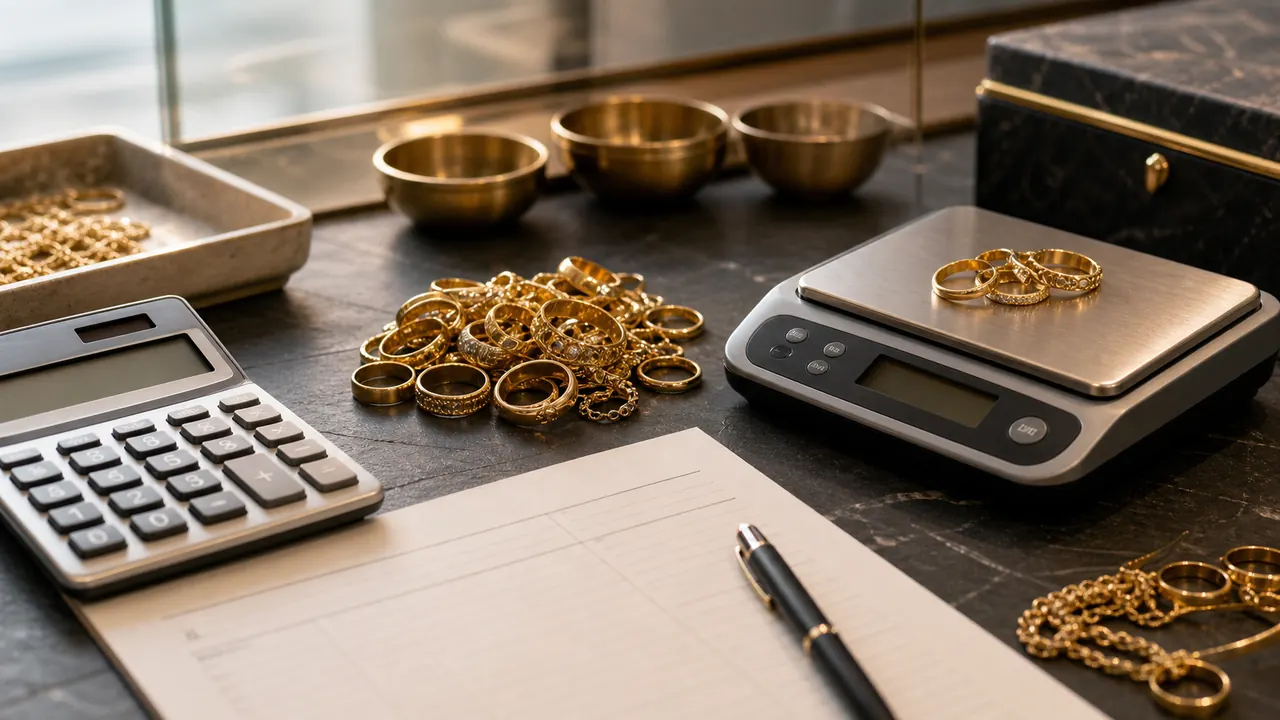
UK cash-for-gold worksheet
Estimate the likely buyer offer
| Item | Gross grams | Pure gold grams | Melt value |
|---|---|---|---|
| 9ct ring | 10.00g | 5.83g | £586.26 |
| 18ct bracelet | 6.00g | 4.50g | £452.52 |
Typical UK cash-for-gold payout ranges
Public offers vary. The table helps you understand the type of quote you are seeing before you accept it.
| Buyer type | Typical payout | Best use case |
|---|---|---|
| Instant cash / pawn style | 50% - 75% | Speed matters more than strongest payout. |
| High-street jeweller | 70% - 88% | Useful for clearly hallmarked jewellery and face-to-face checks. |
| Postal gold buyer | 75% - 92% | Convenient if return terms, insurance and reviews are strong. |
| Refiner or trade buyer | 90% - 98% | Best for larger, cleanly sorted lots or repeat sellers. |
How to use this calculator before selling gold in the UK
A cash for gold calculator UK is most useful before you ask for quotes. It gives you a private estimate of metal value and an offer range, so you can judge whether a buyer is using fair assumptions. Start with the hallmark, then weigh each purity group separately.
The calculator keeps two values visible: melt value and estimated cash offer. Melt value is the recoverable gold content at the current GBP gold price. The cash offer is melt value multiplied by buyer payout percentage. That second number is where local quotes differ.
Questions to ask a UK gold buyer
Ask the buyer to show the weight, carat, spot price timestamp, exchange rate, payout percentage and deductions. If they only show a cash total, you cannot easily compare it with another quote. If they quote per gram, check whether it is for 9ct, 18ct, 22ct or 24ct.
Postal gold services should also explain insurance, tracking, return terms and how long the quoted price is valid. Local buyers should be able to weigh and test the item in front of you. A refiner may pay better on a large lot, but may not be convenient for one or two small pieces.
When cash-for-gold is not the best route
Cash-for-gold is practical for broken chains, single earrings, unwanted rings and mixed scrap lots. It may not be best for sovereigns, Britannias, designer jewellery, antique pieces, watches or gemstone rings. Those items may be worth more as finished goods or collectibles than as scrap metal.
UK offer checks that protect your payout
Before you agree to sell, ask whether the offer is based on gross weight or net gold weight. Gross weight can include stones, clasps, springs or watch parts, while net gold weight should reflect the recoverable metal. A fair comparison needs the same weight basis, the same hallmark and the same live GBP spot reference.
For small lots, convenience can be worth accepting a lower percentage. For larger lots, sorted 9ct, 18ct and 22ct jewellery may justify asking for several quotes. If a buyer will not explain the payout percentage or testing method, use the calculator result as a reason to pause and compare another route.
How to record a quote before you leave the shop
Write down the date, quoted gram price, tested carat, scale weight, payout percentage and any deductions. If you are comparing a high-street jeweller, a postal buyer and a refiner, this record is more useful than remembering the final cash total. It also helps you spot whether a quote changed because of the gold price, the exchange rate or the buyer's margin.
Local buyer versus postal buyer
A local buyer gives you speed and a face-to-face test, which can be useful when you want to ask questions about hallmarks and deductions. A postal buyer may quote strongly, but the practical details matter: insured shipping, return terms, offer expiry, how rejected items are sent back and whether the advertised rate applies to your exact carat and lot size.
Scrap gold calculator UK
Sort mixed jewellery and calculate melt value first.
Gold price per gram UK
Check the live GBP gram benchmark.
Cash for gold calculator UK FAQ
How does a cash for gold calculator UK estimate an offer?
It calculates melt value first, then applies a buyer payout percentage. The offer estimate equals weight times purity times live GBP gold price per gram times the expected payout rate.
What percentage of melt value should I expect in the UK?
It depends on buyer type, lot size and testing confidence. Small instant-cash offers can be much lower, while strong postal, jeweller or refiner quotes may be closer to melt value.
Is the calculator a guaranteed buyer quote?
No. It is a planning tool. A real UK buyer may change the quote after testing purity, deducting stones, checking weight or applying postage and refining terms.
Should I sell 9ct and 18ct gold together?
You can sell them together, but calculate them separately first. 375 and 750 have very different pure-gold content, so averaging the lot can hide value.
What details should a UK gold buyer show me?
Ask for item weight, hallmark or assay result, spot price timestamp, GBP conversion, payout percentage and any deductions. That makes quotes easier to compare.
Is cash for gold the best route for coins?
Not always. Sovereigns, Britannias and collectible coins can carry premiums above melt value. Check coin resale value before accepting a scrap offer.
Do stones and gems count in a cash-for-gold offer?
Usually the metal buyer pays mainly for recoverable gold. Stones may be ignored, deducted or valued separately. Valuable gemstones need a separate appraisal.
Why do online and local UK offers differ?
Each buyer has different costs, refining routes, risk controls and margins. Compare the implied payout percentage, not just the final cash number.