UK melt value worksheet
Gold melt value calculator UK
Calculate the recoverable gold content of UK jewellery, scrap gold, coins and bullion in GBP before comparing buyer deductions or resale options.
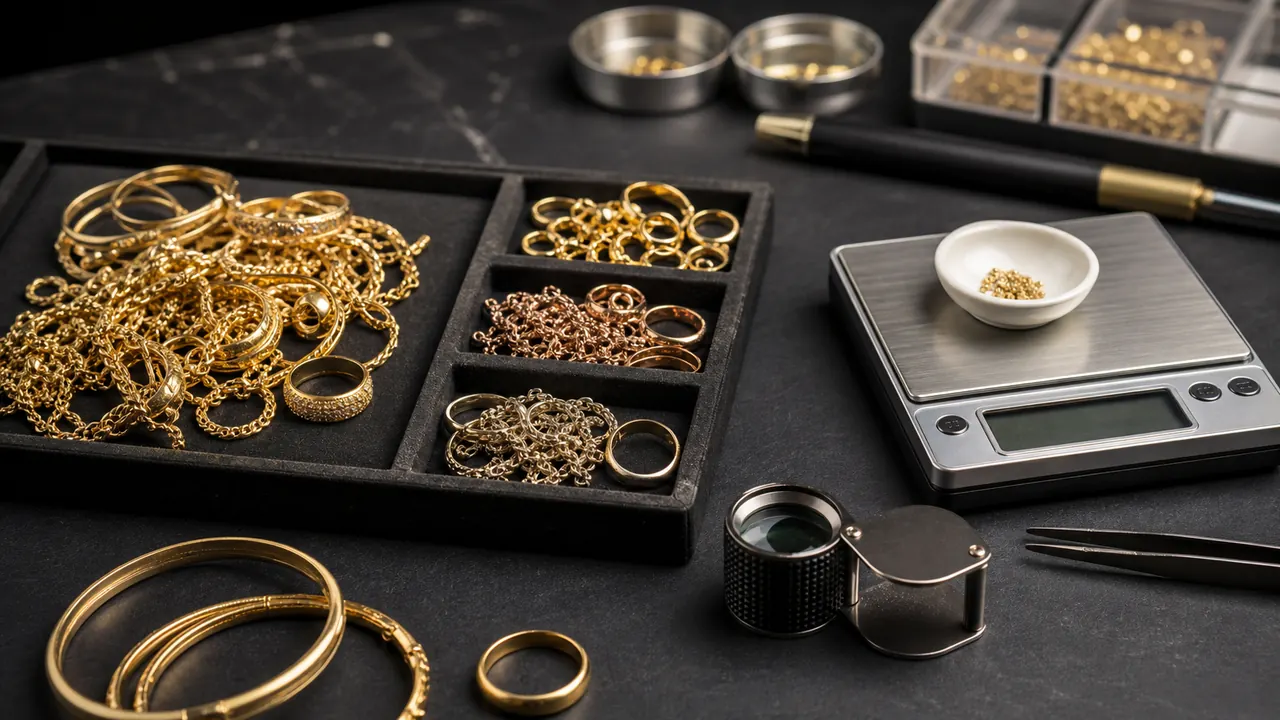
UK melt worksheet
Calculate recoverable gold value
| Item | Gross grams | Pure gold grams | Melt value |
|---|---|---|---|
| 9ct ring | 10.00g | 5.83g | £584.81 |
| 18ct chain | 6.00g | 4.50g | £451.40 |
Gold melt value by UK hallmark
These rows apply common UK and international hallmark purities to the live GBP 24ct price per gram.
| Purity | Melt value per gram | Melt value per troy oz | Common UK context |
|---|---|---|---|
| 24ct / 999 | £100.21 | £3,116.87 | Fine gold bullion, bars and some coins |
| 22ct / 916 | £91.88 | £2,857.91 | High-purity Asian jewellery and some coins |
| 18ct / 750 | £75.23 | £2,339.99 | Fine jewellery, watch cases and premium rings |
| 14ct / 585 | £58.48 | £1,818.95 | 585 jewellery, imported rings and chains |
| 10ct / 417 | £41.83 | £1,301.04 | 417 imported jewellery and durable low-carat pieces |
| 9ct / 375 | £37.62 | £1,170.00 | Common UK everyday jewellery and scrap gold |
| 8ct / 333 | £33.40 | £1,038.96 | 333 European jewellery and lower-carat pieces |
What melt value includes and excludes
A gold melt value calculator UK answers one narrow question: what is the recoverable gold content worth in pounds right now? It does not estimate replacement value, retail jewellery price, designer value, antique value, gemstone value or a buyer's final margin.
That separation matters because jewellery store prices and scrap buyer offers sit on opposite sides of melt value. A shop selling price can be far above melt value because it includes design, labour and retail margin. A cash-for-gold offer can be below melt value because the buyer has testing, refining, hedging and business costs.
Why hallmark purity changes the value
UK jewellery is often described by carat and hallmark. A 375 stamp is 9ct and contains about 37.5% pure gold. A 750 stamp is 18ct and contains 75% pure gold. Two pieces with the same gram weight can therefore have very different melt values.
The safest melt-value workflow is item by item. Sort the lot by hallmark, weigh each group separately, and do not include stones, steel springs, watch movements or non-gold clasps as gold weight. If the mark is missing, test before assuming purity.
When melt value is only a floor
Melt value is a good floor for broken chains, single earrings, damaged rings and ordinary scrap. It may be too low for signed designer jewellery, antique pieces, rare coins, watches or jewellery with valuable stones. In those cases, use the calculator as a minimum benchmark, not the final selling strategy.
How UK sellers can use melt value in a negotiation
Take the melt value into the conversation as a benchmark, not as a demand. A buyer can reasonably deduct for testing, refining, insurance, postage, hedging and business margin. The important question is whether the deduction is clear and whether the same deduction would apply to every purity group.
If you are selling a larger lot, calculate each hallmark group first and keep the figures separate. A mixed parcel of 9ct and 18ct jewellery can look simple as one cash offer, but the underlying melt value may be very different. Clear grouping gives you a stronger basis for comparing a jeweller, a postal buyer and a refiner.
Common UK melt value mistakes
Do not use a 24ct bullion price for 9ct jewellery. Do not include gemstone weight as gold weight. Do not treat a sovereign, Britannia or collectible coin as scrap without checking the coin premium. And do not compare a buyer's payout with a retail replacement price, because those are different markets.
Why the timestamp matters
Gold moves during the day and the GBP exchange rate can also change. If a buyer uses a price from the morning and you compare it with a live afternoon calculator value, the numbers may not match exactly. Use the timestamp to judge whether the difference is market movement or a buyer deduction.
For the cleanest comparison, save the calculator result and buyer quote at the same time of day. That keeps the melt value, GBP price and payout percentage in one consistent snapshot.
Cash for gold calculator UK
Model likely buyer payouts after melt value.
UK hallmark lookup
Check 375, 585, 750, 916 and 999 stamps.
Gold melt value UK FAQ
What is gold melt value in the UK?
Gold melt value is the GBP value of the recoverable pure gold inside an item. It excludes design, brand, stones, shop markup, collector premium and buyer margin.
How do I calculate UK gold melt value?
Convert the weight to grams, multiply by hallmark purity, then multiply by the live 24ct gold price per gram in GBP. For example, 375 gold uses 0.375 and 750 gold uses 0.75.
Is melt value the same as scrap gold price?
Melt value is the metal baseline. Scrap gold price can mean either melt value or the amount a buyer pays after deductions, so always ask how the quote was calculated.
Which UK hallmarks should I use?
Use 375 for 9ct, 585 for 14ct, 750 for 18ct, 916 for 22ct and 999 for 24ct. If the stamp is unclear, testing is safer than guessing.
Does melt value include refining fees?
No. The pure melt value does not include refining fees or buyer deductions. Use the payout selector only when you want to model an offer after costs.
Can I use melt value for sovereigns or Britannias?
Yes for metal value, but coins may have premiums. Check the coin market before selling collectible or investment coins purely as scrap.
Why is 9ct melt value much lower than 24ct?
9ct gold contains about 37.5% pure gold. A 9ct item can be strong and wearable, but its melt value per gram is much lower than 24ct bullion.
Should I include gemstones in melt value?
No. Melt value is for recoverable gold only. Gemstones, watch parts and non-gold components should be excluded or valued separately.